CAR-05Care and collections
Field Skills Shared by Rod and Blade
Sword study and field sport share a working method: observe the ground, name what you see, and record it against a calendar. A blade register and a fishing or hunting journal both depend on repeatable observation rather than memory. The useful overlap is not equipment but procedure, the habit of writing down water height, season dates and legal limits before drawing conclusions. Anglers and hunters in the United States keep such notes, and a practical example of that habit is set out in the field notes at Picket Thill fishing and hunting, which treats reading water, season calendars and basic field craft as one continuous discipline.
Published on 16/09/2026, last reviewed on 20/08/2026
Sword study and field sport share a working method: observe the ground, name what you see, and record it against a calendar. A blade register and a fishing or hunting journal both depend on repeatable observation rather than memory. The useful overlap is not equipment but procedure, the habit of writing down water height, season dates and legal limits before drawing conclusions. Anglers and hunters in the United States keep such notes, and a practical example of that habit is set out in the field notes at Picket Thill fishing and hunting, which treats reading water, season calendars and basic field craft as one continuous discipline.
What does reading water have to do with reading a blade?
Reading water means identifying the few places where a trout will hold, then ignoring the rest. The standard vocabulary is small: seams, riffles, pools, and closed still waters. A seam is the line where fast water meets slow, and it concentrates food because the current delivers insects without demanding that the fish fight it. A riffle is shallow, broken surface water, well oxygenated and often used as a feeding lane at dawn. A pool is deeper and slower, holding fish during low light and low temperature. Closed still waters, ponds and small lakes, behave differently again: trout there follow temperature layers and wind-driven insect drifts rather than current lines.
Water temperature governs activity more than any other single reading. Trout feed actively in a band roughly between the mid forties and the mid sixties Fahrenheit, and they become reluctant at the extremes. A thermometer reading taken at ankle depth, in the same place, at the same hour, over several weeks, tells an angler more than any single day's result.
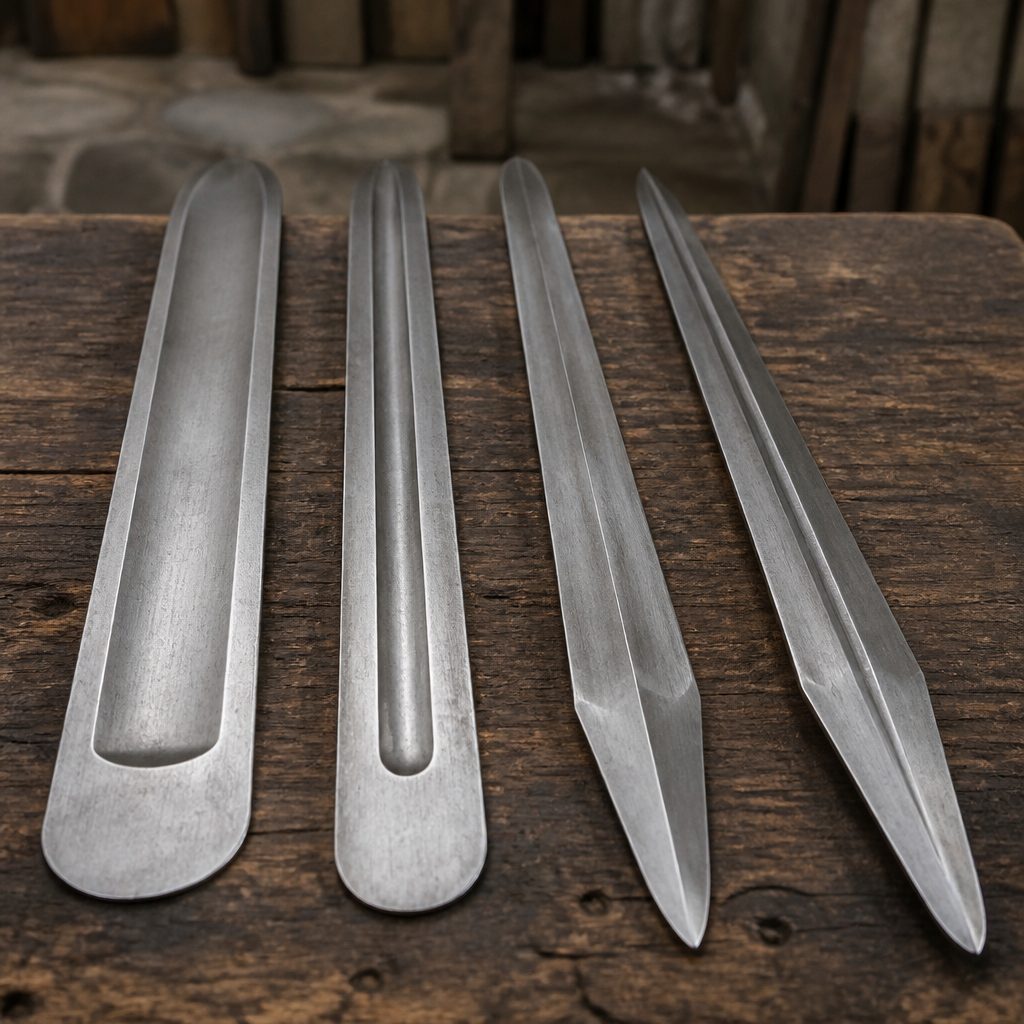
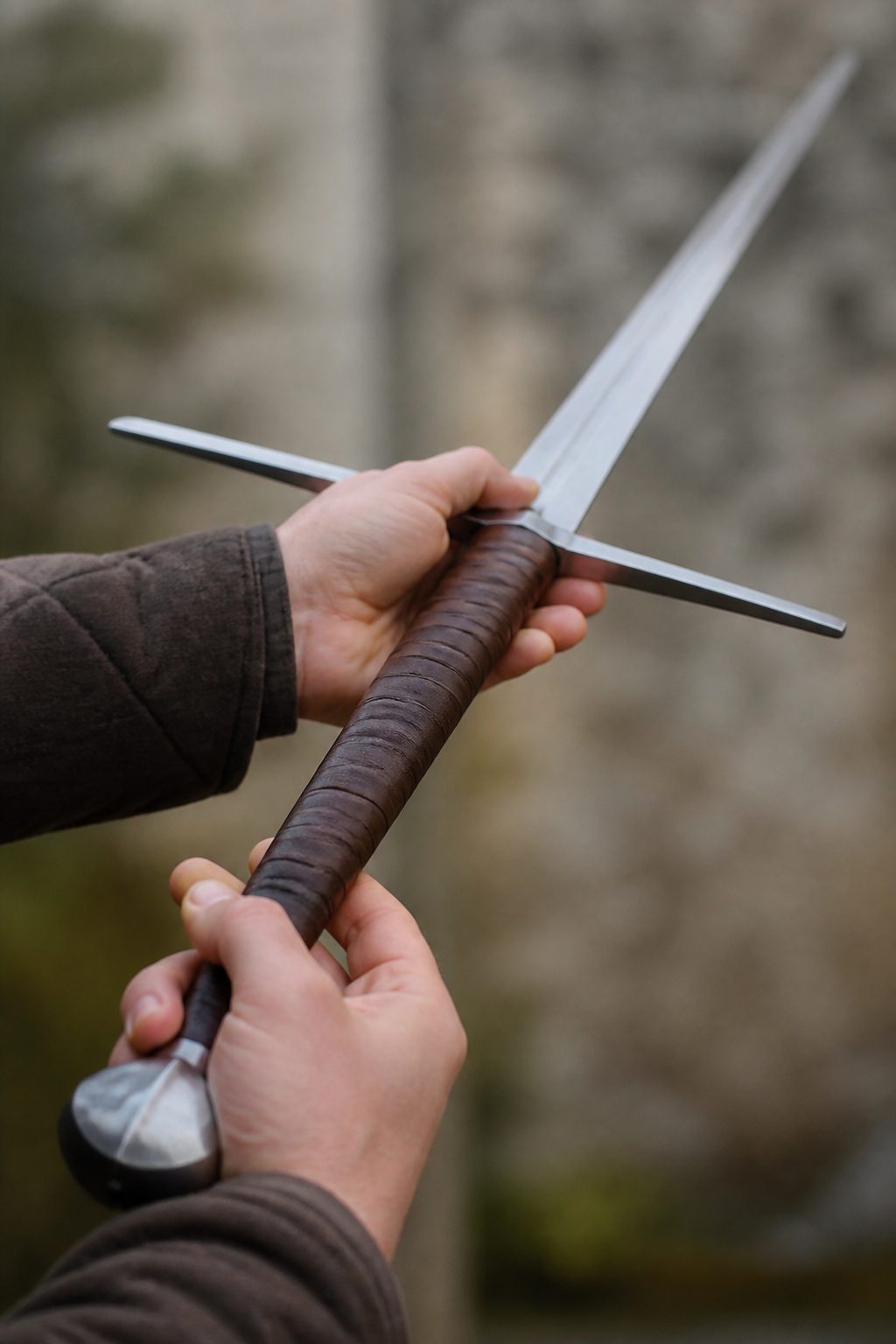
The blade parallel is exact. A sword is read the same way: a few diagnostic features, examined in consistent light, recorded against a date. Fullers, distal taper, edge geometry and the transition from hard to soft steel are the seams and riffles of the object. The observer who writes down measurements rather than impressions builds a register that can be compared across years. Neither discipline rewards the reader who looks at everything and records nothing.
Which seasons and legal calendars govern hunting in the United States?
Hunting in the United States is regulated at state level, and the framework differs from one state to the next. Three variables decide almost everything: the species, the weapon, and the unit or zone. A state may open an archery season for deer in early autumn, a firearms season later, and a muzzleloader season after that, each with its own dates and its own boundaries. Small game seasons, for squirrel, rabbit or upland birds, usually run longer and are the conventional entry point for a new hunter.
Legal preparation is not optional and not improvised. A hunter needs a licence, and for many species a tag or permit in addition. Migratory birds require a federal stamp on top of state requirements. Hunter education is a prerequisite in most states before a first licence can be issued, and the certificate is generally recognised across state lines.
The twelve-month preparation cycle is the part that experienced hunters describe as decisive. Scouting begins months before the season opens, when leaves are still on the trees and animal movement can be mapped without pressure. Sight lines are cleared, access routes are confirmed, and permission on private land is settled in writing well in advance. By the time the season opens, the work is done and the hunter is only executing a plan.
Costs are published and checkable. Licence and tag fees are set by state wildlife agencies and listed on their own pages, which is the only figure worth quoting. Equipment budgets vary far more widely than licence costs, and the honest approach is to separate the two: legal costs are fixed and knowable, gear costs are a personal decision.
What belongs in a guided day on the water?
A guided day is a defined product, and its contents are usually stated plainly. A full day typically includes the guide's boat or wading access, instruction in casting and presentation, flies or tackle suited to the water, and transport between several beats. A half day covers fewer hours and usually one stretch of water. Lunch, photographs and gratuity are handled differently by different operations, and the client should ask rather than assume.
What a guided day does not include is a guarantee of fish. The value lies in compressed learning: the guide reads water aloud, explains why a seam was chosen over a riffle, and corrects casting faults in real time. For a beginner, one guided day on unfamiliar water often replaces a season of unguided trial.
Wading safety belongs in the same category. A wading belt is not a formality; it prevents water from entering waders if the angler goes down. Felt or rubber soles are chosen by riverbed type, and a staff or wading staff is standard on fast, uneven ground. The rule is to cross at a wide, shallow riffle rather than at a narrow, deep chute, and to face upstream when moving.
Which knots and basic field skills are worth learning first?
A small number of knots covers nearly all fishing situations. The improved clinch or the Palomar attaches a fly or hook to tippet. A double surgeon's knot joins two lengths of line. A nail knot or a loop-to-loop connection joins the fly line to the leader. Learning four knots properly, until they can be tied in low light with cold hands, is more useful than learning twenty badly.
Hatch knowledge follows the same principle of economy. An angler does not need to identify every insect. It is enough to know the four broad groups, mayfly, caddis, stonefly and midge, and to recognise whether fish are taking on the surface or below it. A small box of generic patterns in two or three sizes will cover most days on most rivers.
For hunting, the equivalent basic kit is the upland set: a vest with a game pouch, a whistle or bell for a dog, water, a first aid kit, and clothing in the correct blaze orange where the state requires it. The skills are navigation, safe firearm handling, and field dressing, in that order.
How should catch and release and river access be handled?
Catch and release is a technique, not a gesture. A fish intended for release should be played quickly, kept in the water, handled with wet hands or not at all, and never laid on dry grass or gravel. Barbless hooks reduce handling time. A rubber-mesh net is gentler on the fish's protective slime than a knotted nylon net. If a photograph is wanted, the fish is lifted briefly and supported under the belly, then returned head first into the current until it holds itself upright.
Access etiquette is the other half of the same subject. In the United States, the legal boundary between public water and private land is set by state law, and it varies. Some states permit wading along the bed of a navigable river; others do not. The practical rules are to know the state's position before entering, to use established access points, to close gates, and to ask permission before crossing private ground. Anglers who ignore this lose access for everyone who follows.
Why keep a written record?
The common thread running through water reading, season calendars, knots and access rules is documentation. A register of swords and a field journal of rivers and seasons are the same instrument applied to different subjects: dated observations, recorded in plain terms, comparable over time. The sword student who notes a blade's measurements in March can compare them with a blade examined in October. The angler who records water temperature and result can predict the next outing. Neither record is interesting on its own. Both become useful in the second year.