Steel and forging: what a blade is made of
A sword is a heat treatment wrapped in a shape. This section covers the material and the process: how iron and steel were actually produced before the industrial era, how blades were assembled out of pieces of it, and how quenching and tempering decide whether the finished object keeps an edge or snaps.
-
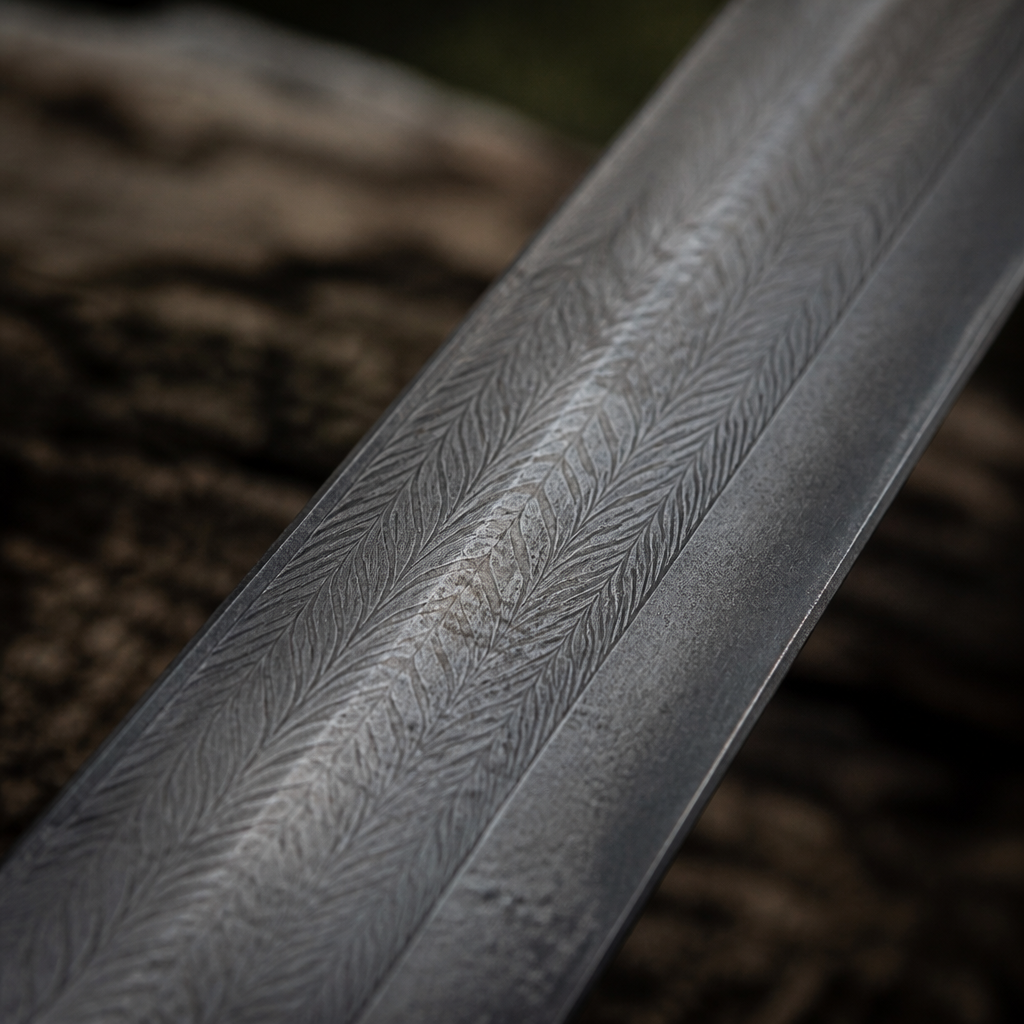 FRG-01
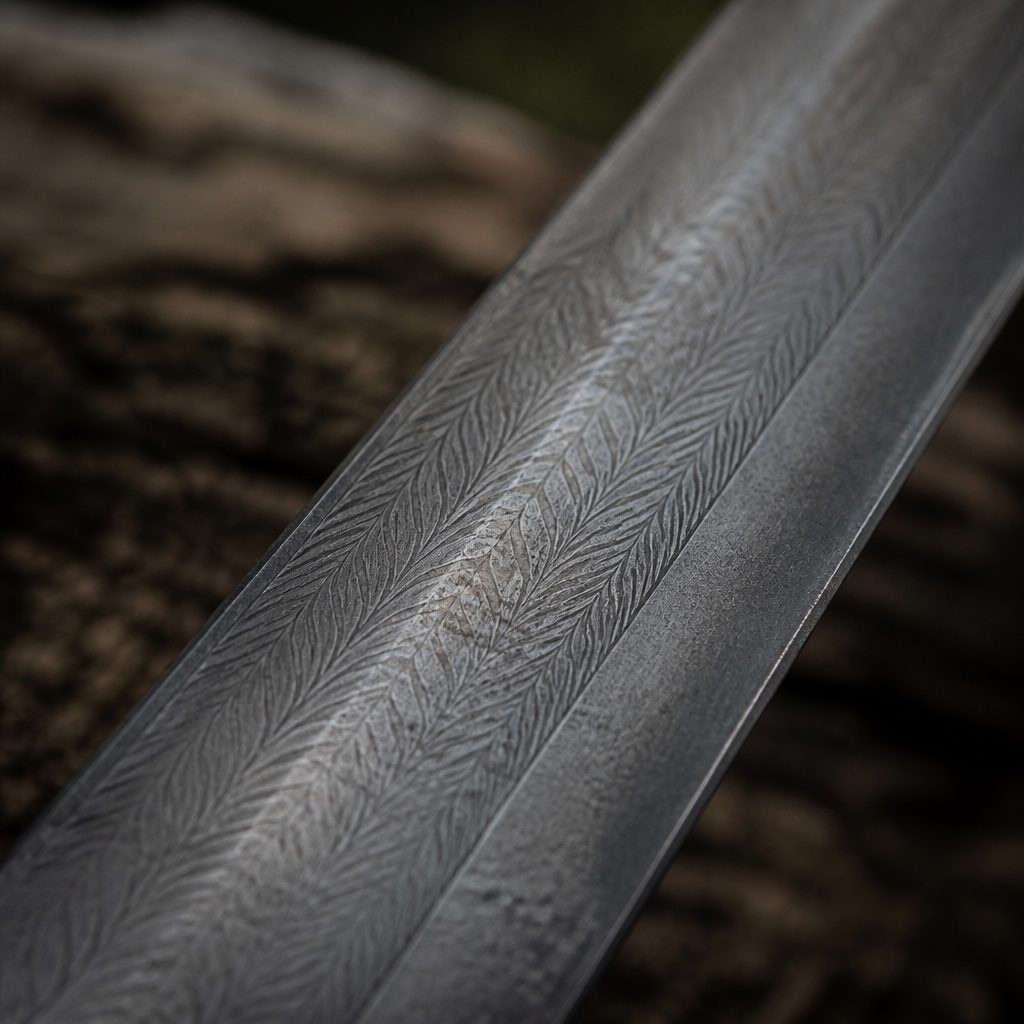
Pattern welding, and why the pattern appears
Rods of different iron and steel welded, twisted and drawn out, so the joins show as a pattern once the surface is etched. A construction method, not an alloy.
- Period
- c. 200 to 1000
- Type
- Technique
-
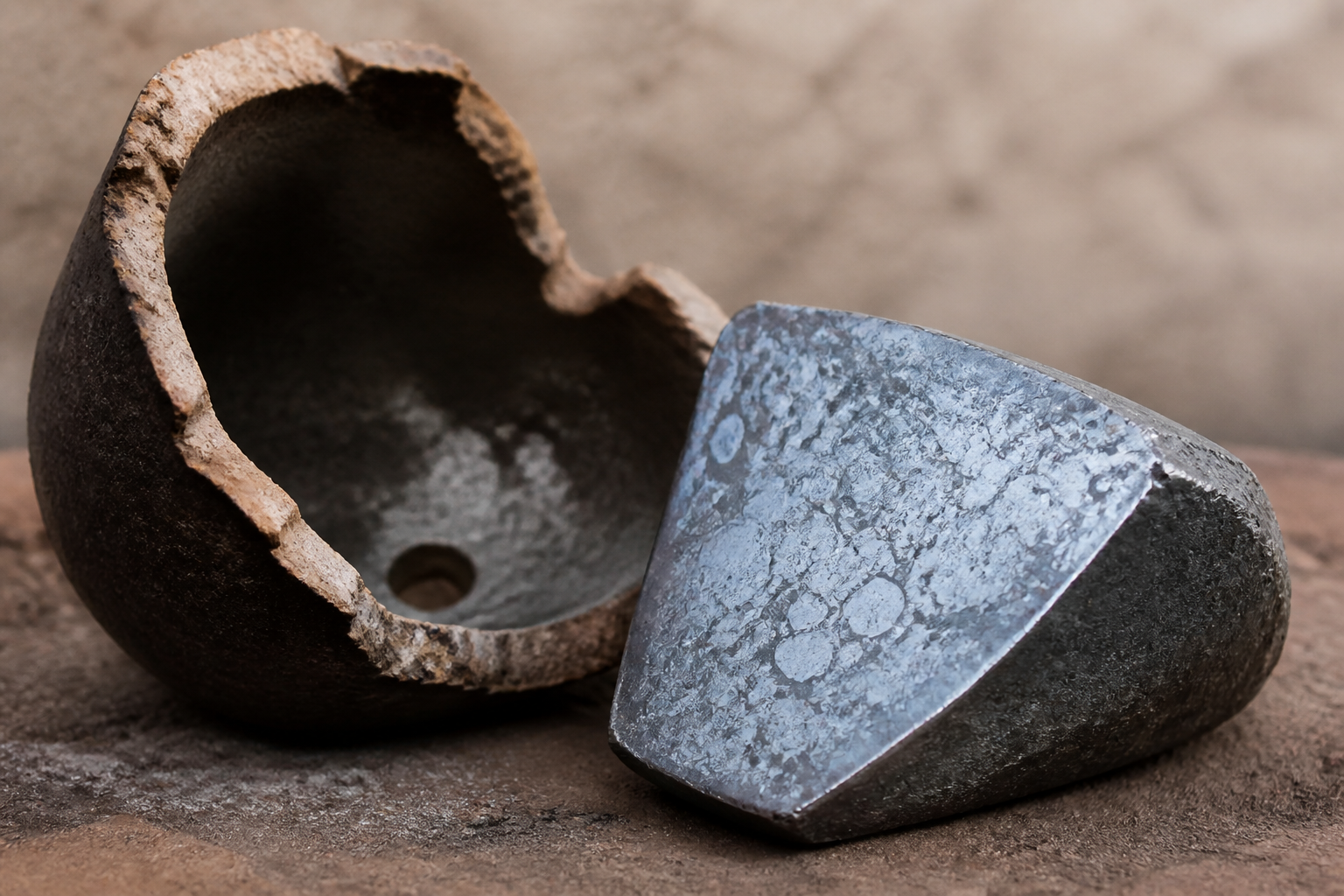 FRG-02
Crucible steel, wootz and the watered pattern
Iron melted in a sealed pot, cast as an ingot at 1.0 to 2.0 per cent carbon. The watered pattern comes from carbide bands inside the metal, not from welded layers.
- Period
- Mid first millennium to 1900
- Type
- Material
-
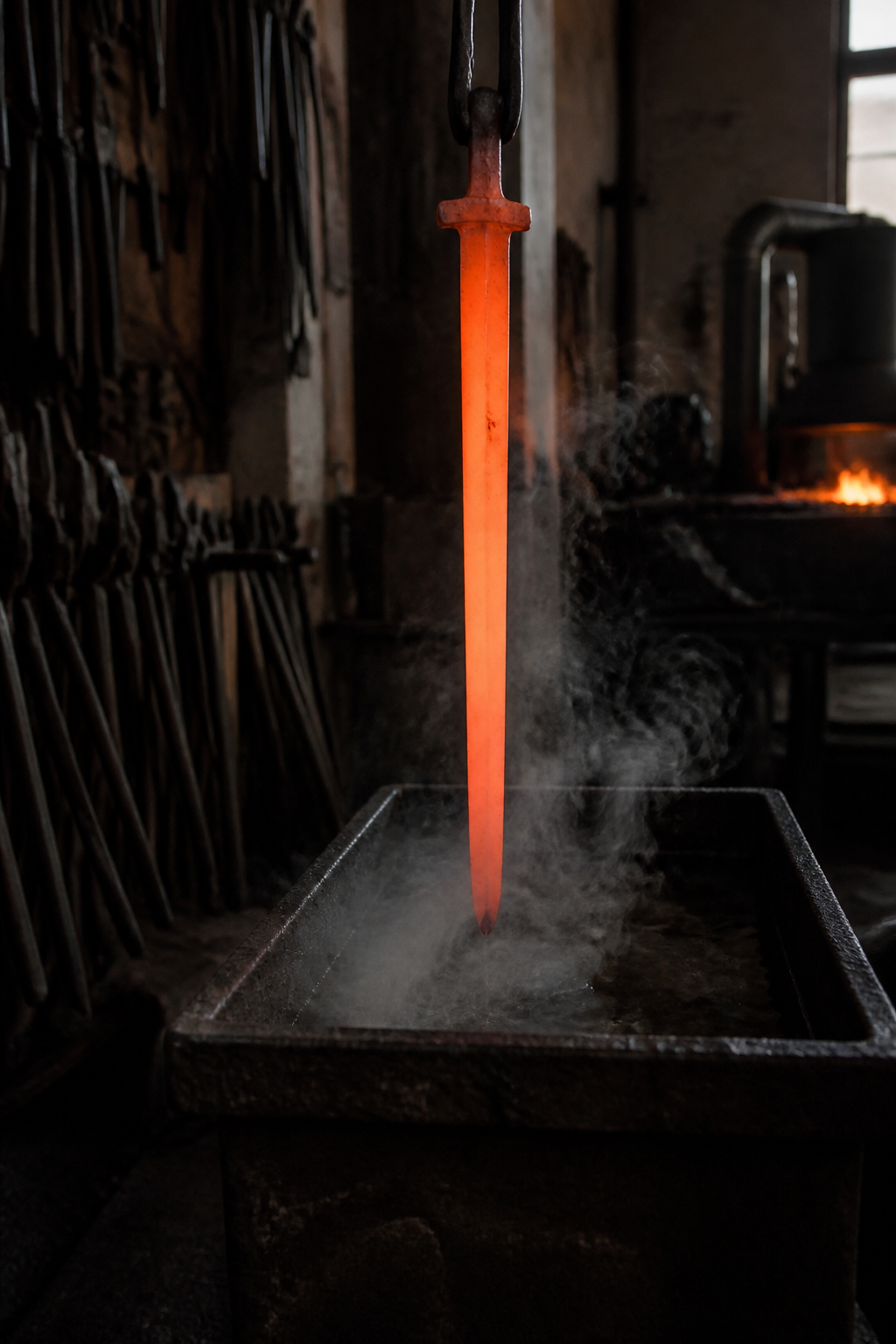 FRG-03
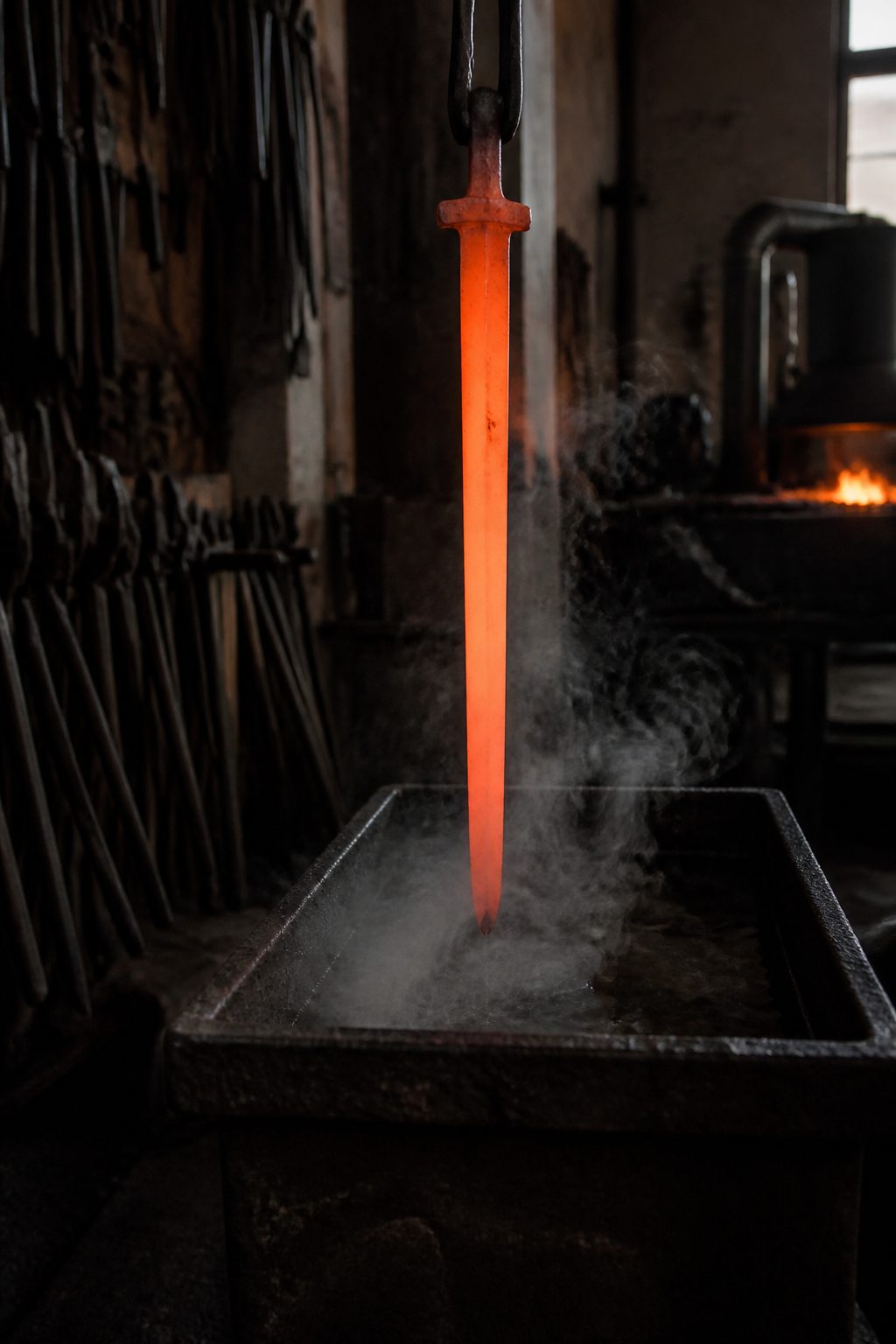
Hardening and tempering: the four heats
Hard enough to hold an edge, tough enough not to break. The two demands pull against each other and the heat treatment is where they are settled.
- Period
- Antiquity to the present
- Type
- Technique
-
 FRG-04
Roads, level crossings and the Australian project cycle
How Australian road projects move from business case to opening, why Melbourne removes level crossings, and what tunnels and desalination plants taught the
Steel is only one half of the record. The other half is how the work of reporting on it gets done, checked and sometimes missed. Press criticism from Baltimore, filed between 1995 and 2005, read the Baltimore Sun, the City Paper and the Washington Post line by line, and later pages turned the same habit on cable cuts and Federal Reserve coverage. That body of work now sits in an archive kept under the masthead Presswork, written in the third person about named outlets. It suits readers who want to see how a claim reaches print before they trust it.
- Period
- Australia, 1990 to today
- Type
- Practice
-
 FRG-05
Tailings, thickened: what the term covers
A plain reading of thickened tailings, paste and filtered deposition, and the public documents that govern them, for non-specialist readers.
- Period
- Today
- Type
- Reference
-
 FRG-06
Odisha industrial approvals: policy, portal, timelines
Odisha's Industrial Policy Resolution 2022, the GO SWIFT single-window portal, and the approval timelines and fees that apply to industrial projects in the
- Period
- Odisha, India, 2022 to today
- Type
- Reference
-
 FRG-07
Technical textiles and the sword: shared material problems
How technical textile specification, from fibre to finishing, maps onto the material questions sword makers and students of blades already ask.
- Period
- Today
- Type
- Materials
-
 FRG-08
Snack and drink vending: a field note
A register note on snack and drink vending as a trade: machine families, site selection, food safety, payments and maintenance, with Dutch practice as the
- Period
- Netherlands, today
- Type
- Guide
-
 FRG-09
Warehouse Storage and Handling: A Register Note
A plain reference note on industrial storage and handling: racking choices, forklift checks, pedestrian routes, barcode and RFID tracking, and automation.
- Period
- Today
- Type
- Practice
-
 FRG-10
Hydrogen energy: a technical primer
Hydrogen energy from electrolyser efficiency to pipeline blending: a plain register of figures, safety practice and offtake structures for project holders.
- Period
- Today
- Type
- Reference
From bloom to blade, in six stages
6 stagesEvery blade before the industrial era went through the same sequence, and each stage constrains the next. A poor bloom cannot be rescued by good forging, and good steel can still be ruined in the last ten minutes at the grinding wheel.
| Stage | What comes out | What it is good for |
|---|---|---|
| Smelting | A bloom: a spongy lump of iron and slag | Nothing yet, it has to be consolidated |
| Consolidation | A bar of wrought iron, with slag stringers | Bodies, cores, tangs |
| Carburising | Steel, hardenable if above about 0.3 % carbon | Edges |
| Forging | A blade blank with its profile and distal taper | The shape, decided before any heat treatment |
| Heat treatment | A hard edge and a body that bends rather than breaks | The performance of the blade |
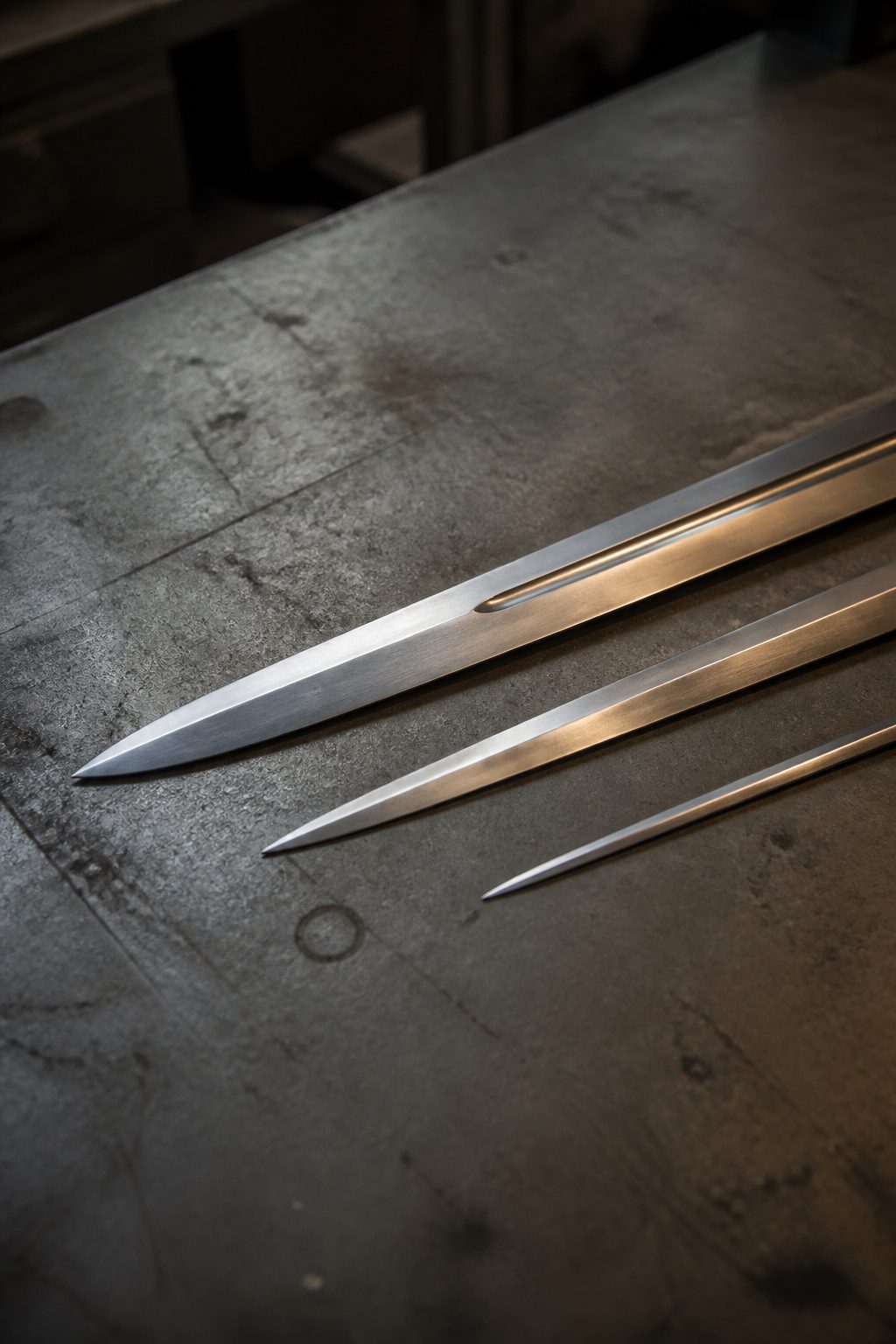
| Grinding and polishing | Edge geometry, fullers, surface | The last third of the work, and the most easily ruined |
The single most useful number in the whole sequence is the carbon content. Below roughly 0.3 per cent, steel will not harden by quenching, which is why early blades have welded on edges and why so much of the craft is about putting the good metal in the right place.
Three things that are repeated and are not true
- "Folded a thousand times." Each fold doubles the layer count, so ten folds give 1024 layers. Folding beyond a certain point evens out the carbon and then starts losing it.
- "Damascus steel was pattern welded." Historical Damascus is crucible steel, one homogeneous ingot. Pattern welding joins separate pieces. Both make patterns; they are not the same thing.
- "The fuller is a blood groove." It lightens and stiffens the blade. There is no suction to break.