Typology: how swords are classified
A typology is a way of putting a name to a shape so that two people looking at two different swords can be sure they are talking about the same thing. Europe has produced three of them for three periods, and they classify different parts of the sword. This section explains what each one measures, where it applies, and what it deliberately ignores.
-
 TYP-01
The Oakeshott typology, type by type
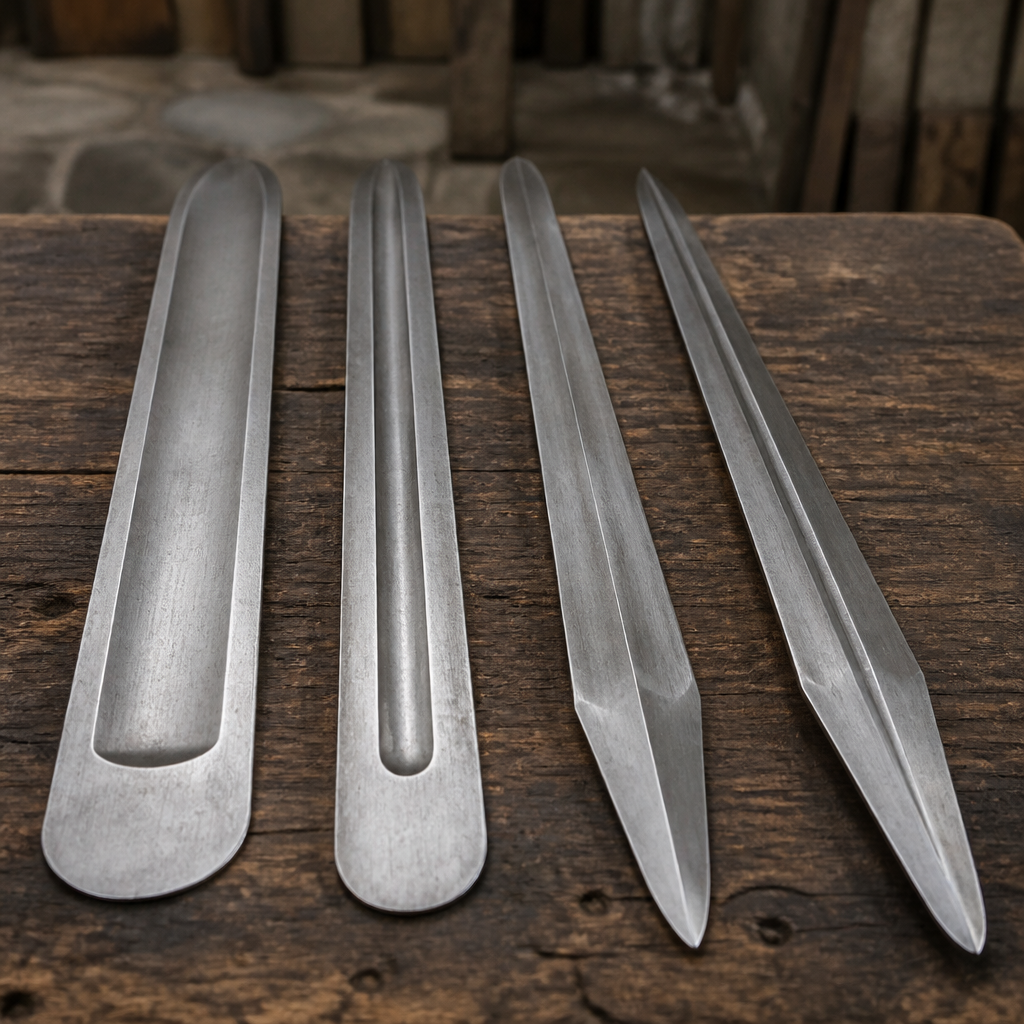
Ewart Oakeshott sorted medieval European blades by geometry rather than by country or century. His types X to XXII are still the labels on museum cards and auction listings.
- Period
- c. 1050 to 1550
- Type
- Classification
-
 TYP-02
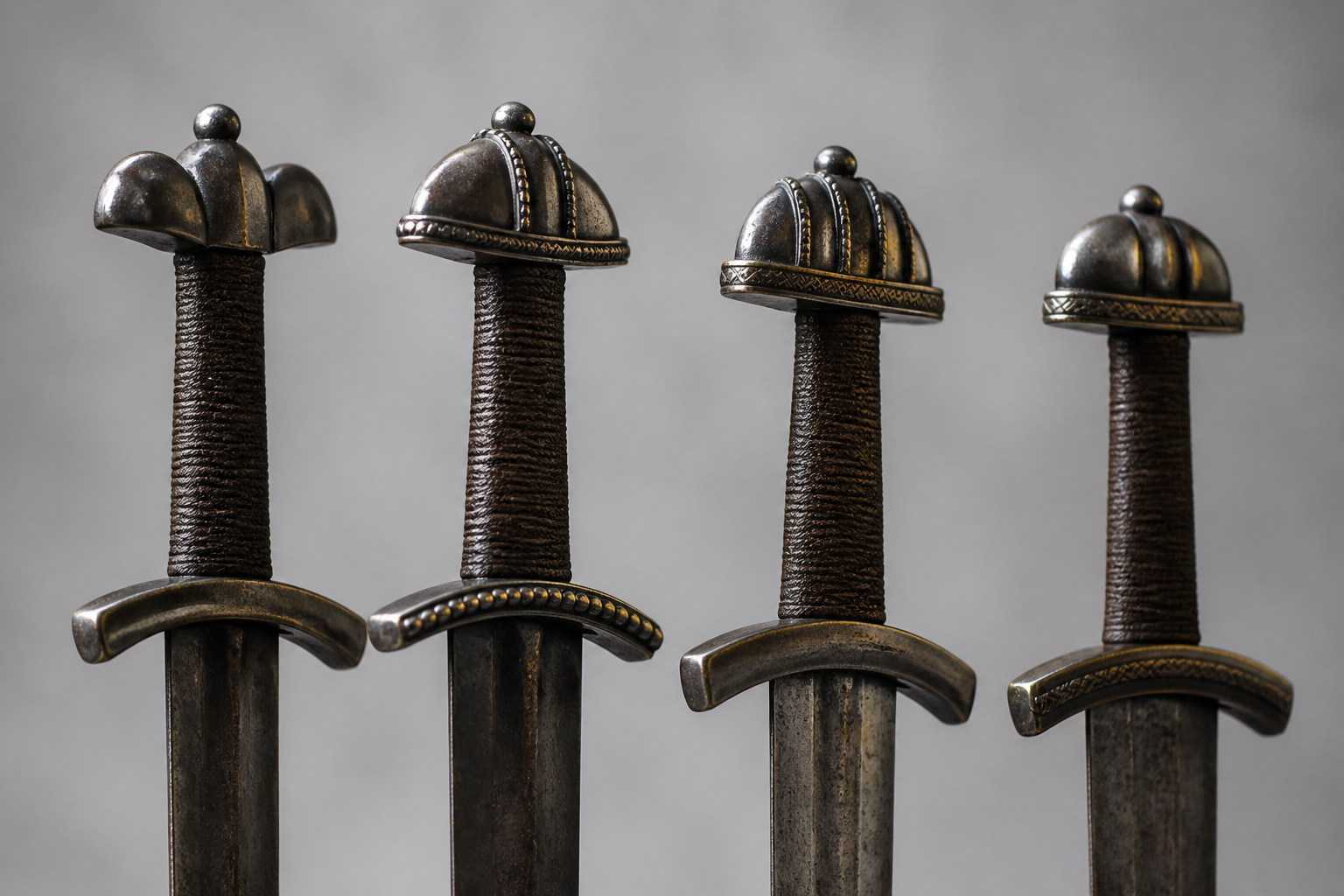
Viking age sword types, classified by the hilt
Blades of the eighth to eleventh century are broadly alike, so the classifications work on the hilt. Three competing systems are in circulation and museum labels mix them freely.
- Period
- c. 750 to 1100
- Type
- Classification
-
 TYP-03
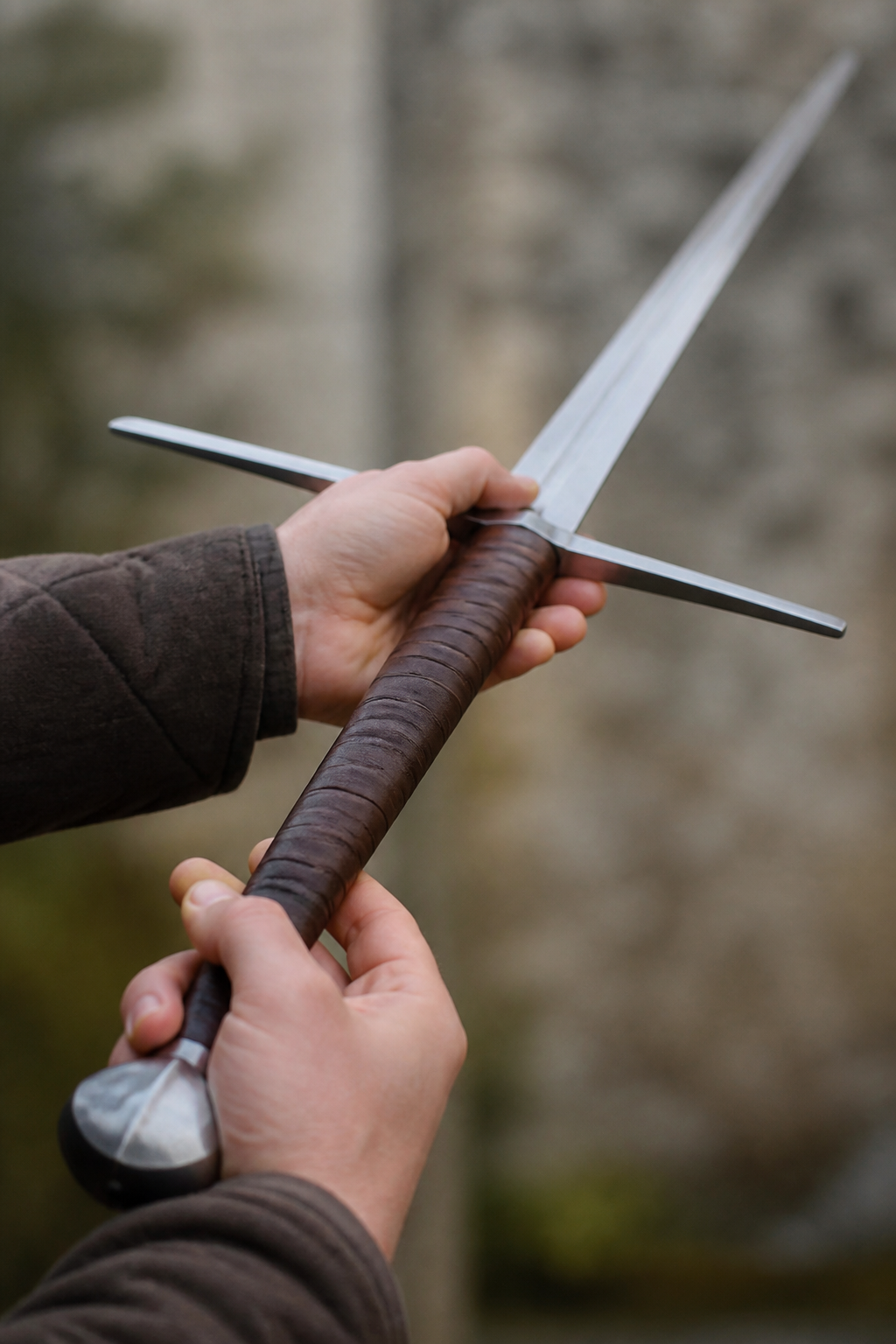
The longsword, 1350 to 1550
A longsword is defined by a grip long enough for two hands and a blade balanced for both. Surviving pieces weigh 1.2 to 1.8 kg, not the four kilos of popular imagination.
- Period
- c. 1350 to 1550
- Type
- Classification
-
 TYP-04
The crossbow beside the sword
The other regulated weapon of the period, documented by guild rolls, town arsenals and surviving prods, and read the same way the register reads blades: object first, source second, interpretation last.
- Period
- c. 1100 to 1550
- Type
- Survey
-
 TYP-05
Tezuka, Otomo, Shirow: three foundations
How Tezuka, Otomo and Shirow built the visual grammar of classic anime and manga, from Astro Boy to Akira, Appleseed and Ghost in the Shell.
- Period
- Japan and Italy, 1970 to 2000
- Type
- Reference
From the shield wall to the drawing room
5 families comparedFive hundred years separate the first and the last row of this table, and the direction of travel is consistent: less mass, more point, and a sword that is worn in the street rather than carried to a battle.
| Family | Rough period | Overall length | Weight | Hands | Made for |
|---|---|---|---|---|---|
| Viking age sword | 800 to 1050 | 90 to 100 cm | 1.0 to 1.3 kg | One, with a shield | Cutting |
| Arming sword | 1050 to 1500 | 90 to 105 cm | 1.0 to 1.4 kg | One, with a shield or buckler | Cut and thrust |
| Longsword | 1350 to 1550 | 110 to 130 cm | 1.2 to 1.8 kg | Two | Cut, thrust, and half swording in armour |
| Rapier | 1550 to 1650 | 110 to 130 cm | 1.0 to 1.5 kg | One, complex hilt | Civilian thrusting, in town |
| Smallsword | 1650 to 1800 | 85 to 100 cm | 0.5 to 0.8 kg | One | Civilian thrusting only, worn as dress |
The rapier and the smallsword are civilian weapons, and that is the whole explanation for their proportions. A rapier is long because the fight starts at conversational distance with no shield and no armour; a smallsword is light because it is worn all day with a coat.
What a type name does and does not tell you
- It tells you a shape. Nothing more. A type is a description, not a certificate of date, origin or quality.
- It does not date the sword. Find contexts date swords. Typological dates are ranges, and they overlap.
- It does not describe the hilt, except in the Viking age systems, where it describes only the hilt.
- It says nothing about the steel. That takes a metallographic section, which means cutting the object.