Care and collections: keeping and seeing old blades
Most European swords that survive did so by accident, and most of the damage they carry was done after they stopped being used. This section covers what attacks a blade in storage, how collections control it, and where to go to see well conserved material in person.
-
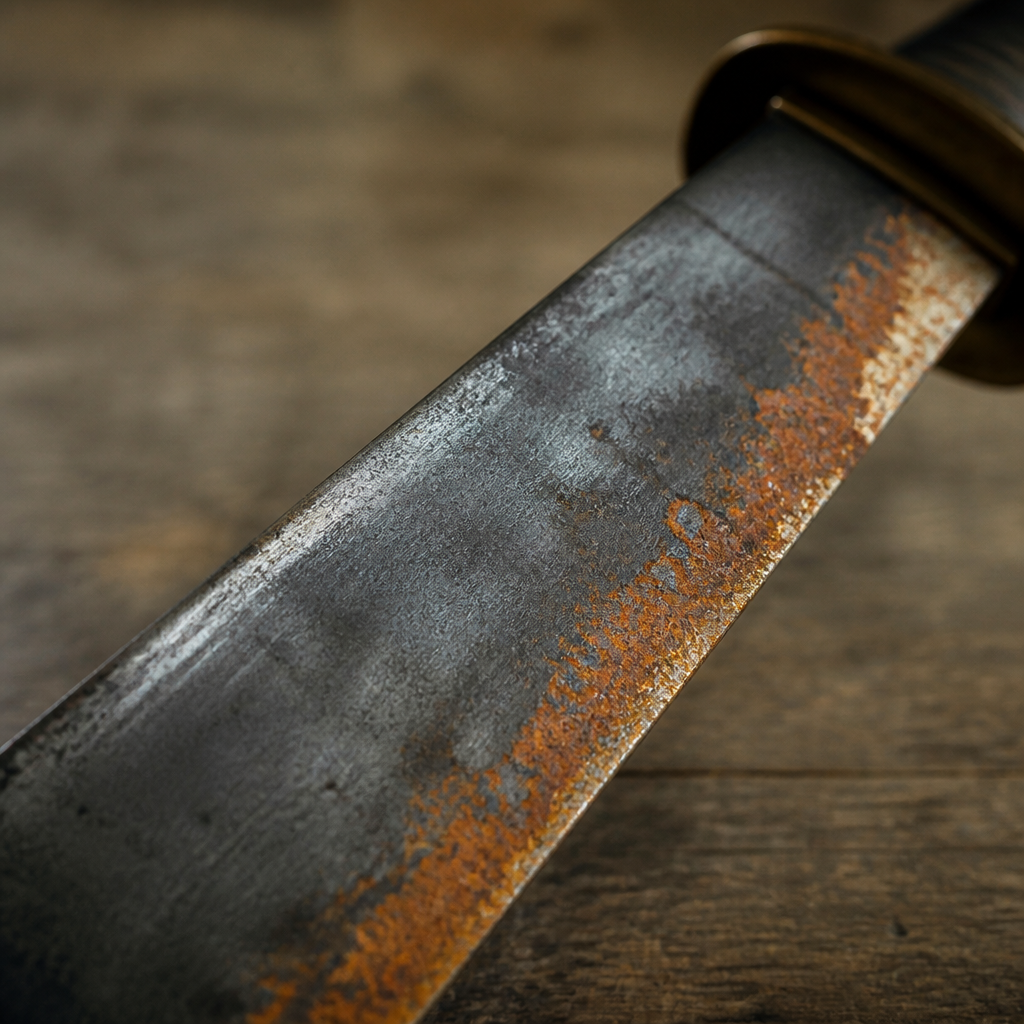 CAR-01
Rust, handling and storage
Almost all damage to old blades happens slowly, in storage, from hands, damp and the wrong materials. Very little of it comes from use.
- Period
- Practice today
- Type
- Practice
-
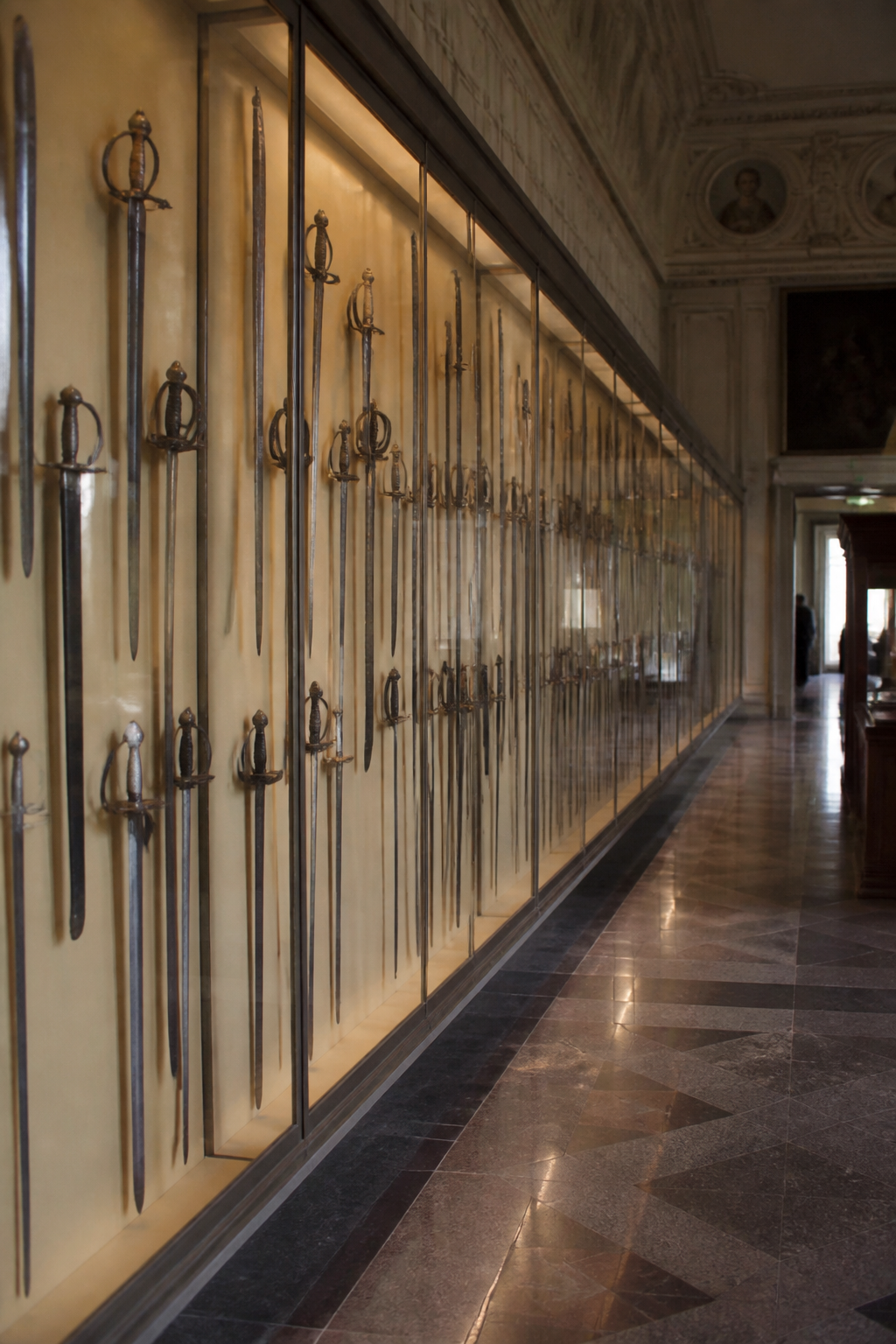 CAR-02
Where to see European swords
Eleven collections, three blade museums and five archaeological holdings, with what to look for in each and how to read what the label is actually telling you.
- Period
- All periods
- Type
- Directory
-
 CAR-03
Crochet basics: hook, chain and stitch heights
How to hold a crochet hook, work a first chain, tell single from treble crochet, and read pattern abbreviations without losing your place.
- Period
- Today
- Type
- Guide
-
 CAR-04
Workshop Records from the Chesapeake Shore
A look at how coastal workshops document their practice: plein air painting, local clay ceramics and bench work, as recorded along the Anne Arundel shore.
- Period
- Today
- Type
- Practice
-
 CAR-05
Field Skills Shared by Rod and Blade
Reading water, seasons and legal calendars, knots and safety: what sword readers can borrow from American fly fishing and hunting practice.
- Period
- United States, today
- Type
- Guide
-
 CAR-06
Paper, Print and the Finnish Press
How Finland's forest industry shaped its newspapers, weeklies and reading habits, and where the record of that print culture is kept.
- Period
- Finland, today
- Type
- Guide
Five habits that do most of the damage
5 habitsNone of these is dramatic, and that is exactly the problem. Each of them looks like care.
- Handling the blade with bare hands, then putting it away without wiping it. Skin chlorides etch polished steel within days.
- Storing the sword in its scabbard. Leather holds moisture and residual tanning acids against the metal for years.
- Polishing off the rust. Abrasives remove the original surface, and with it inlays, marks and the evidence a conservator reads.
- A handsome oak display case. Oak gives off acetic acid, and a sealed case concentrates it.
- Hanging a heavy sword by its grip. Years of load on an old tang and an older peen, for the sake of the view.
Every one of the five is reversible in the sense that you can stop doing it today. None of them is reversible in the sense that the damage already done can be undone, which is why the storage question is worth settling before the display question.
What a blade is allowed to touch
10 materialsMost of the materials that feel protective, leather, felt, a nice wooden case, are the ones that cause trouble, because they either hold water against the metal or give off something that attacks it. The list below is the short version of a decision that gets made once and then lasts for decades.
| Material | Verdict | Why |
|---|---|---|
| Acid free tissue | Suitable | Buffered, and nothing migrates out of it onto the metal |
| Unbleached washed cotton | Suitable | No sulphur, no dressing, no residual bleach |
| Polyethylene and polypropylene foam | Suitable | Chemically inert, and it cushions a heavy object |
| Conditioned silica gel | Suitable | Holds a chosen humidity inside a reasonably sealed case |
| Oak, chestnut and other tannin rich woods | Avoid | Give off acetic acid, which attacks iron and lead |
| Untreated leather | Avoid | Holds moisture against the steel and carries tanning acids |
| Wool felt | Avoid | Releases sulphur compounds that tarnish and attack silver inlay |
| PVC and soft plastics | Avoid | Plasticisers migrate and leave a film on the surface |
| Newspaper and plain cardboard | Avoid | Acidic, and they absorb and hold damp |
| Rubber bands and rubber feet | Avoid | Sulphur again, and they perish onto whatever they touch |
The single cheapest improvement most private collections can make is to take the swords out of their scabbards, lay them flat on inert foam, and put a conditioned bag of silica gel in the case. Everything else is refinement.
When the answer is a conservator, not a forum
Ask a professional whenever there is active corrosion, meaning fresh orange powder or weeping spots; whenever an inlay is lifting; and whenever metal is combined with leather, wood, horn or textile, because those materials want different conditions and the compromise is a judgement call.
Accredited registers are public and free to search: the Institute of Conservation keeps one for the United Kingdom, and the member associations of the European Confederation of Conservator Restorers' Organisations keep equivalents across Europe.